Situation
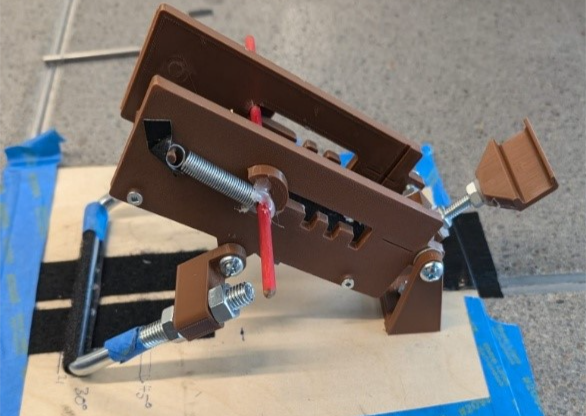
For my product design course project, I designed and fabricated a product prototype for a ping pong ball launcher with my teammates Hammad Anwer, Vanshaj Malhotra, and Dong To Khoa. Our objective was to create an educational product that would teach projectile physics to children in a fun and engaging way. The launcher also needed to be accurate enough to hit a bucket using a ping pong ball.
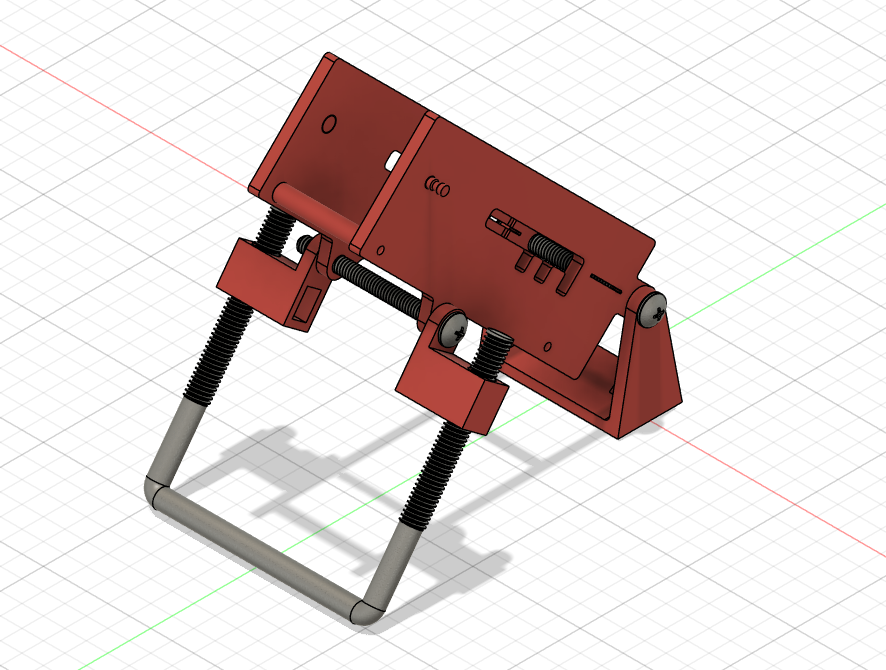
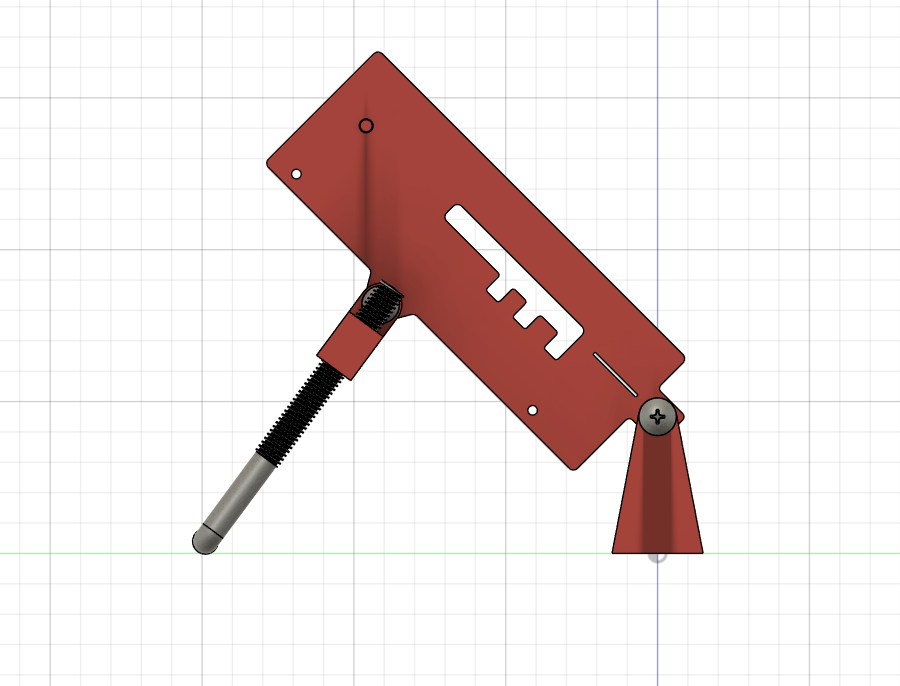
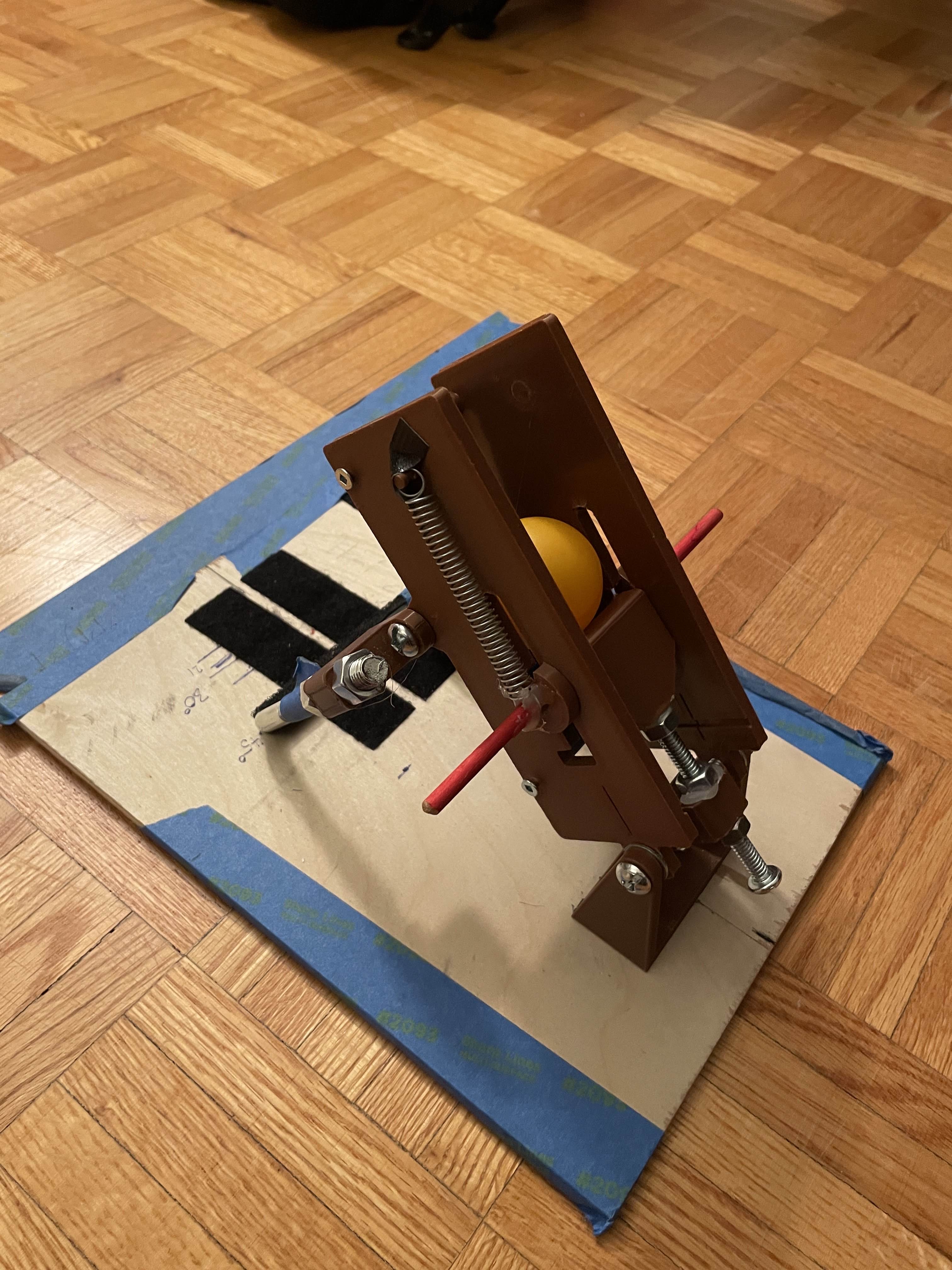
Left and Middle: A CAD model of our launcher. Right: Final assembly.
Methods Used
We researched the toy market to identify customer needs and used competitive benchmarking to position our product. In the second half, we made a mechanical design that would meet the needs of the market segment, and then constructed a prototype of our design to test and validate our concept.
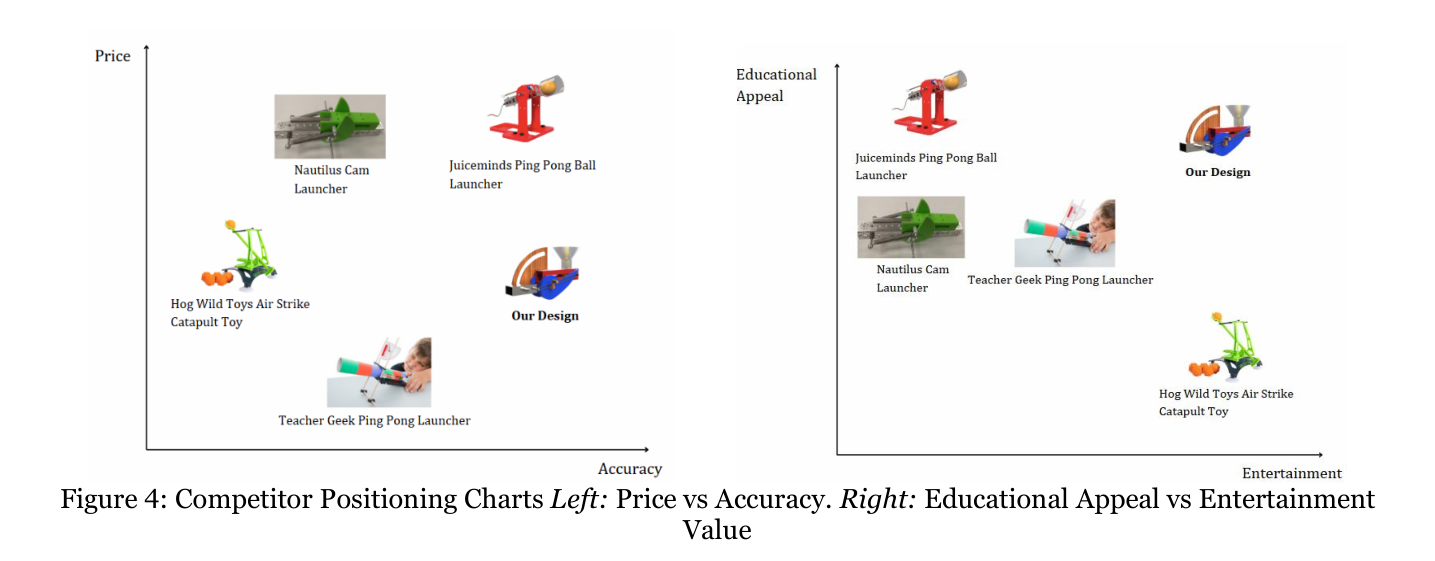

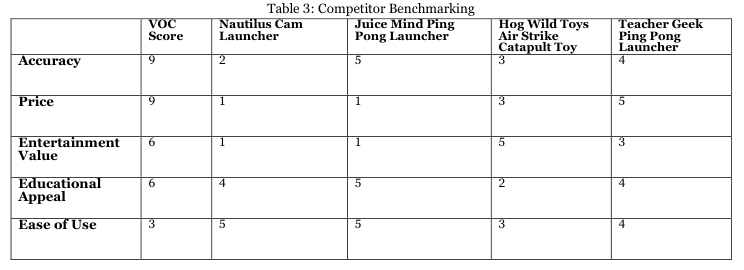
After researching competitor products, we scored them based on 5 criteria.
We calculated what the final price of the product should be based on a price-volume curve, manufacturing costs, product development costs, and other economic factors. On the engineering side, I was responsible for dimensioning the part geometry carefully so the launch trajectory of the ping pong ball was exactly how we intended. I also made optimizations to 3D print the design in less time, using less material, and without using supports.
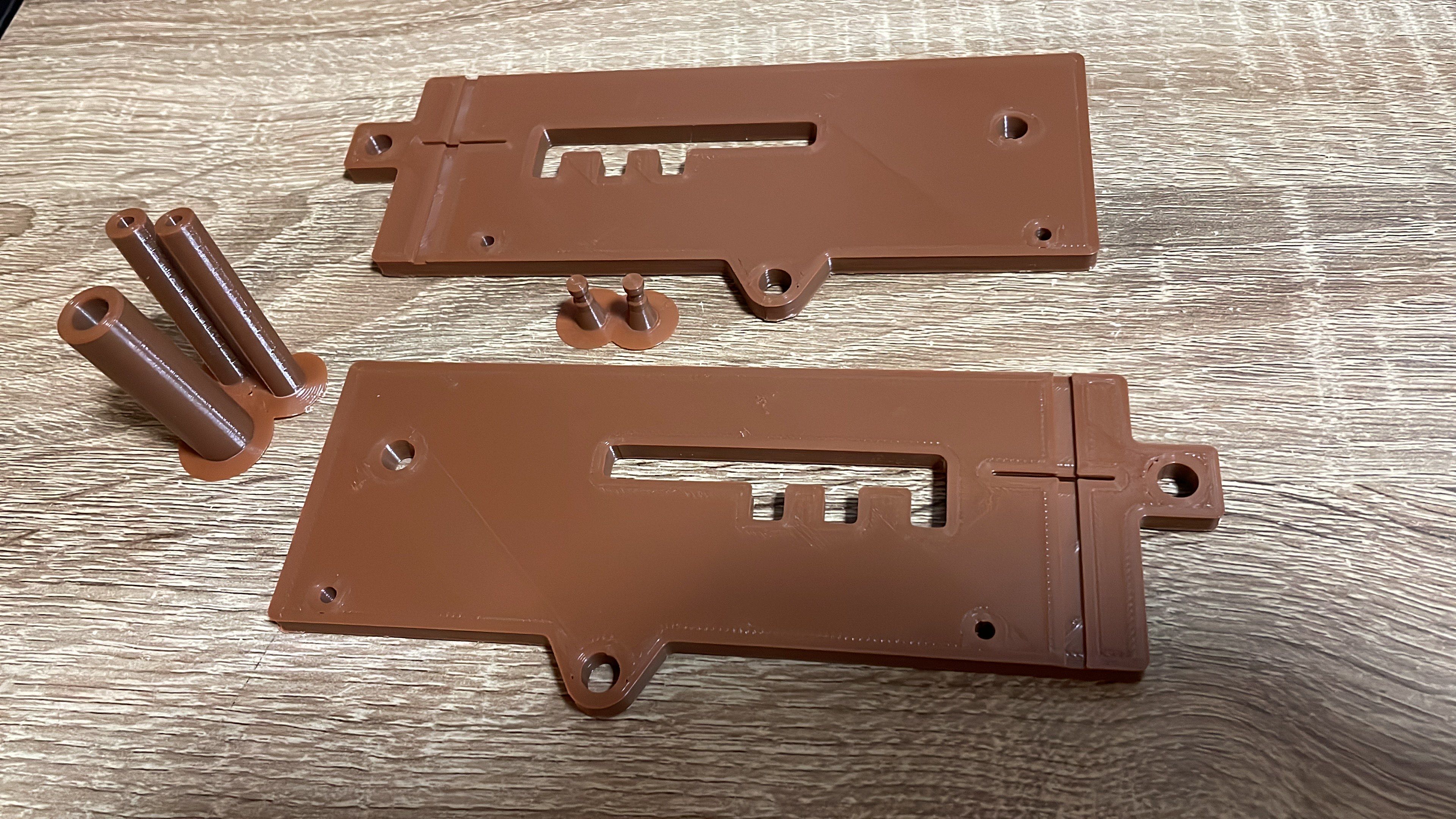
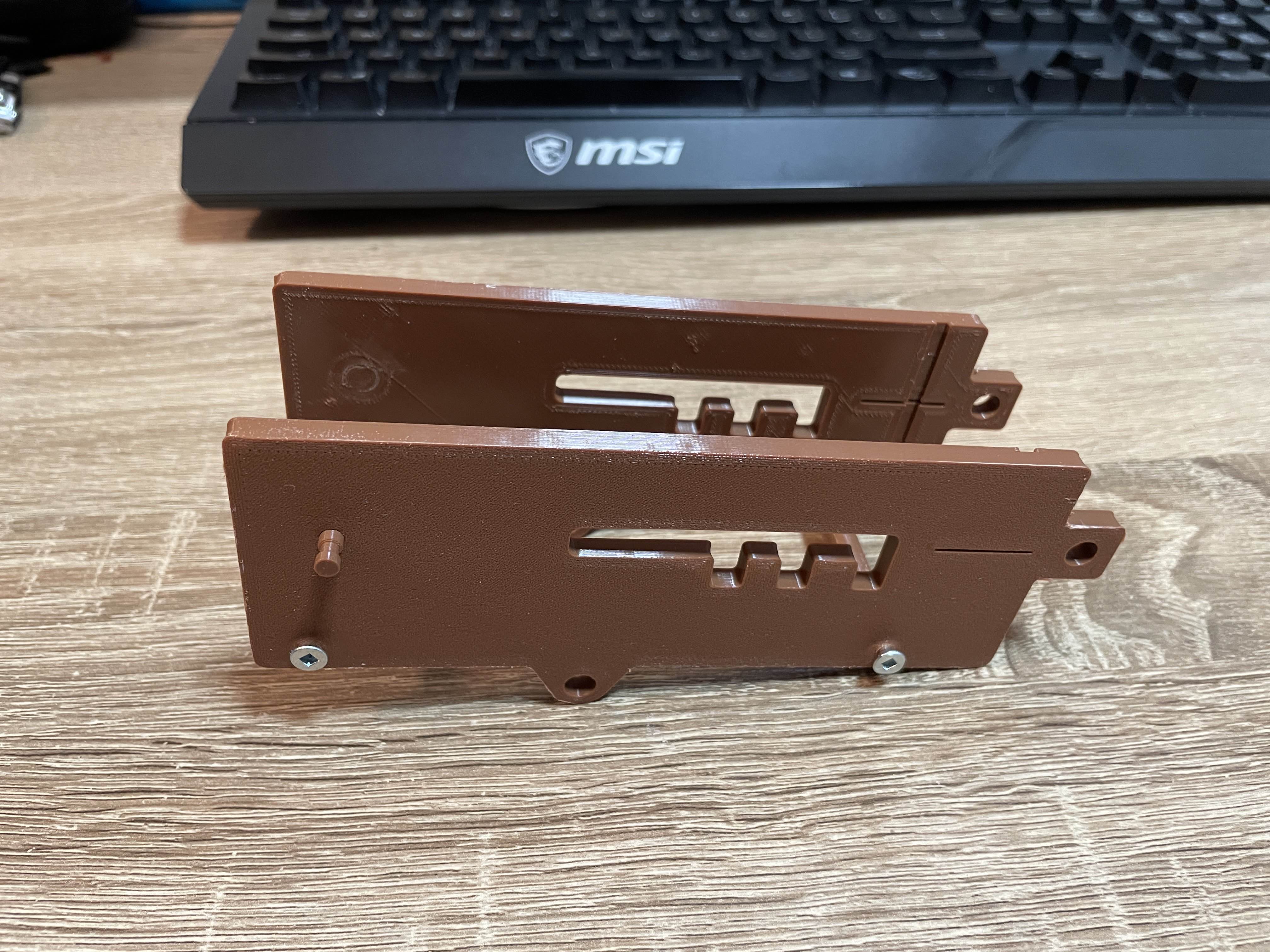
Left: The 3D printed parts. / Right: Completed assembly of 3D printed parts.
After building our first prototype, I pushed for further design improvements to reduce launch inconsistency by adding a firing latch, adding circlips to the guide rails, and modifying the cannon’s base to use screw fasteners.
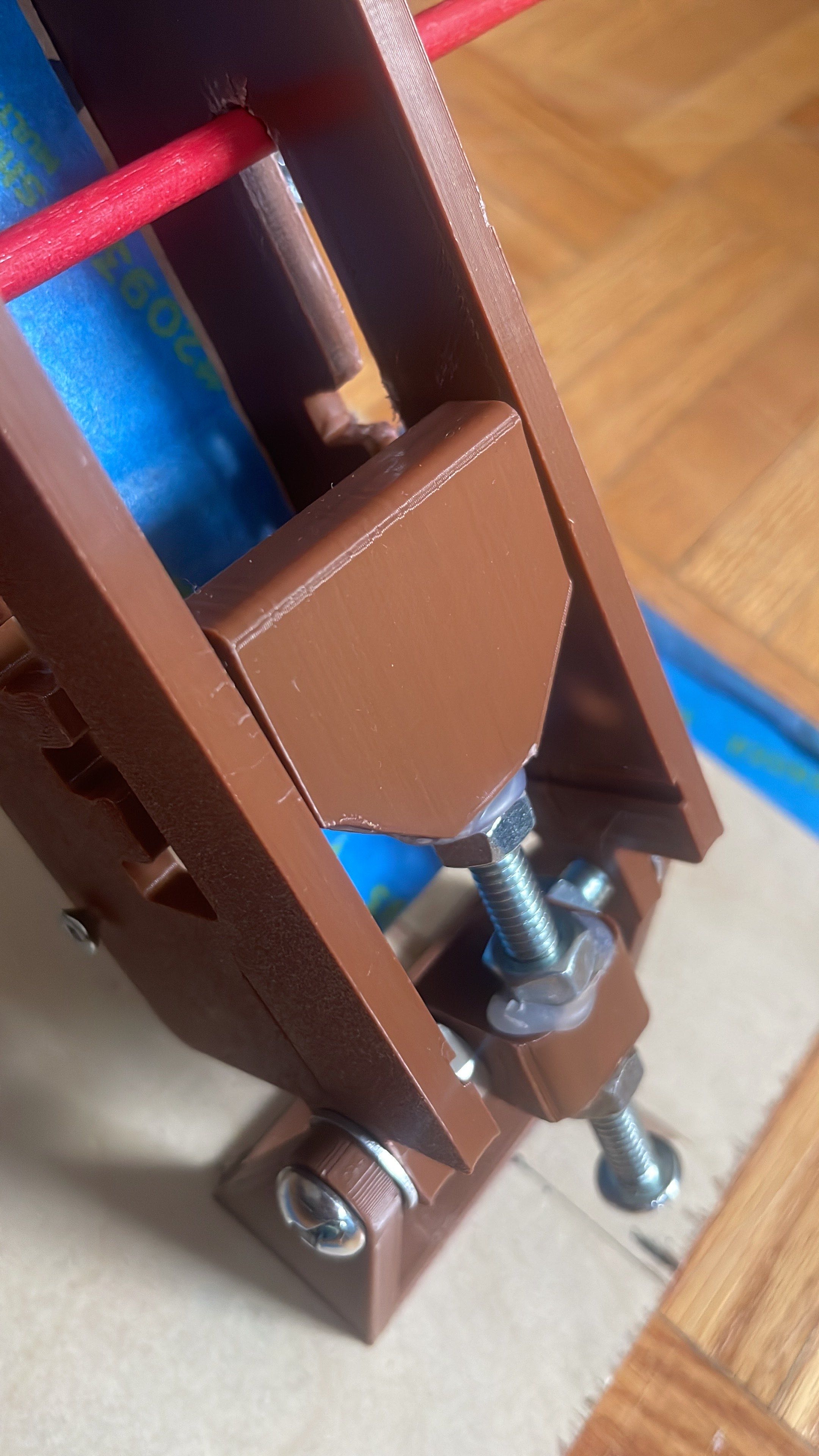
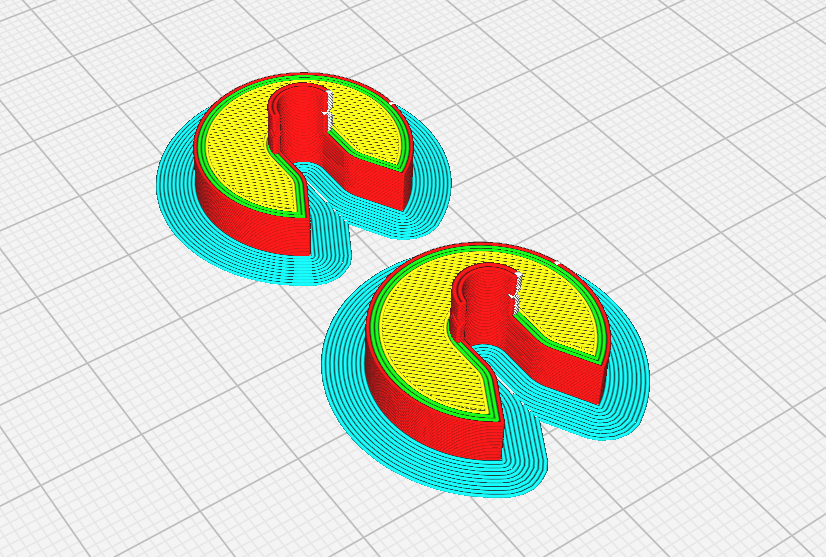
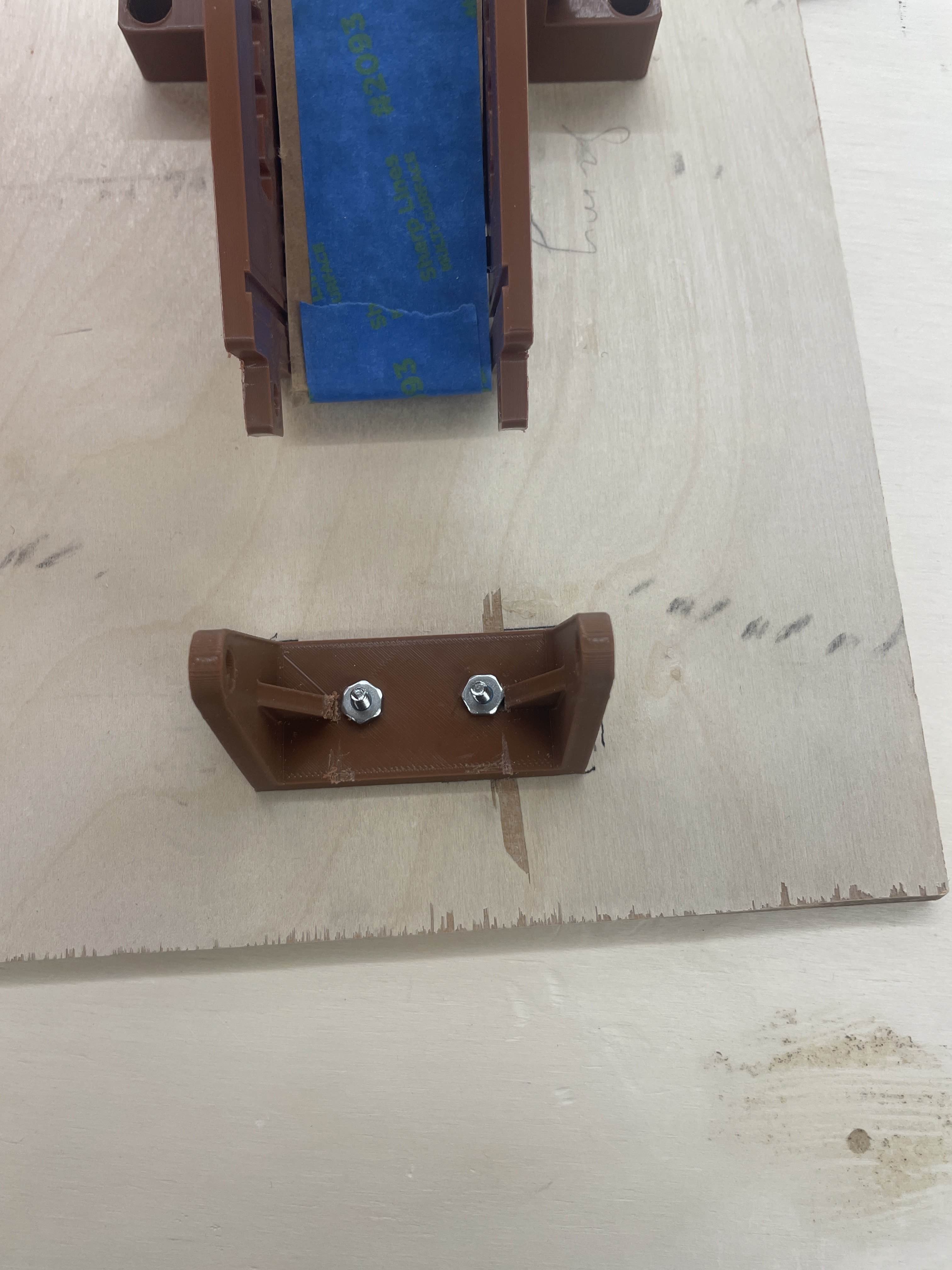
The improvements we made to the launcher. From left to right: Firing latch, circlips, screwing the base down.
Outcomes
We successfully created a prototype that can hit a bucket 0.5 feet wide from 10 feet away. Using this prototype, we modelled the product’s performance using a Design of Experiment, Response Surface Methodology. During an in-class demonstration of our product, our Response Surface correctly predicted the launch angles and spring extensions required to score a ping pong ball into a target bucket placed a random distance away. Future work on the project could improve its accuracy at larger distances, create a design for injection molding that is mass produceable, and to add product theming.
The bucket was only 6 inches wide and we could hit it from 10 feet away!
Here are the links to the full project report with Part A being customer-oriented and Part B being engineering-oriented.