Situation
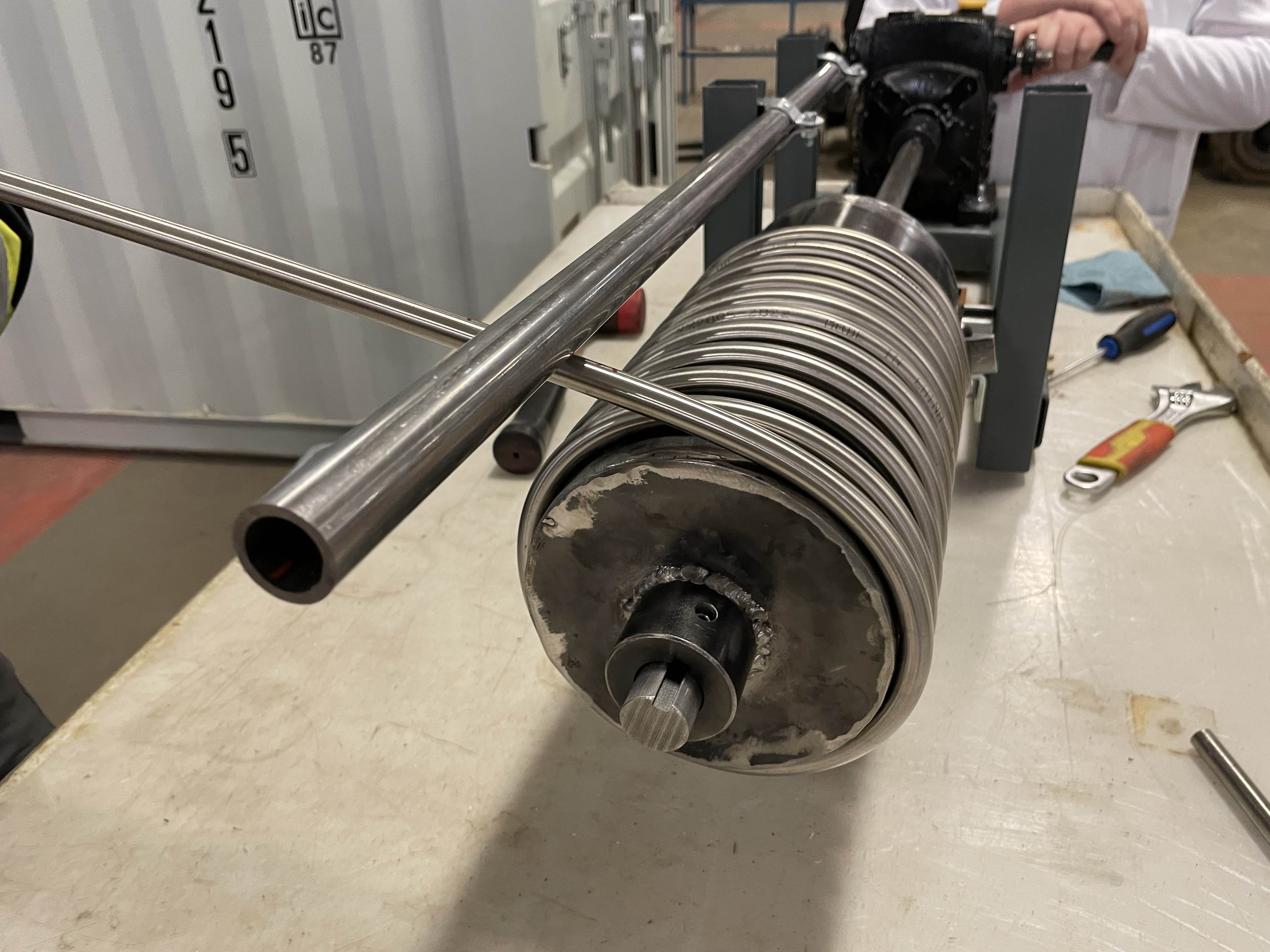
During my 16-month internship at Hydrogen Optimized, I was responsible for designing and building a coil bending machine for manufacturing hydrogen gas cooling lines. The coils had highly specific design requirements, making them expensive to produce, especially in the limited quantities desired. The goal was to develop a custom bending machine that could manufacture the coils in-house at a significantly lower cost than outsourcing to local machine shops.
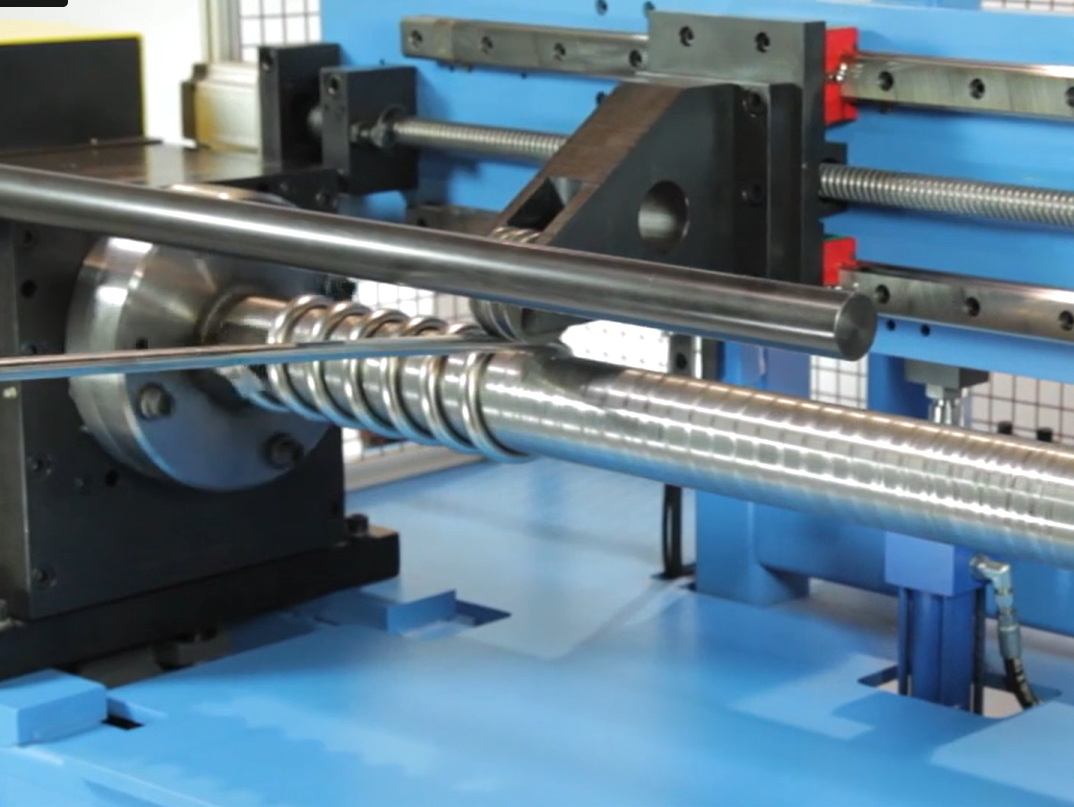
Above: The DRB25 by Winton Machine is an example of a CNC coil bending machine.
Methods Used
I first gathered design requirements for the coil to specify its exact dimensions, geometry, and material. Then, I conducted research into existing devices that can create coils similar to what we desired. I studied a variety of coil CNC machines, industrial pipe benders, and hand-cranked mandrels built by brewing hobbyists. Based on my research, I identified a minimum viable strategy for bending the coils, created a high-level concept sketch, and then began to design the machine in CAD.
Design was accelerated thanks to McMaster-Carr’s library of CAD parts and the extensive variety of mechanical components available for purchasing and ordering. I still needed to select which specific parts to order, however. Keeping the design requirements in mind, I sized the central turning shaft’s diameter, the thickness of the steel drum bending surface, and the width of the frame. I also purchased an automotive speed reducer gearbox from princess auto to power the hand-cranked bending machine.
Once the design was finalized, I moved into the manufacturing phase, making weld drawings for joining the strut channels, drawings for specifying where to drill holes in the frame, and detailed assembly instructions for how to put the machine together. Once the parts came in, I oversaw the installation and operational setup of the machine by coordinating and conducting assembly with other colleagues.
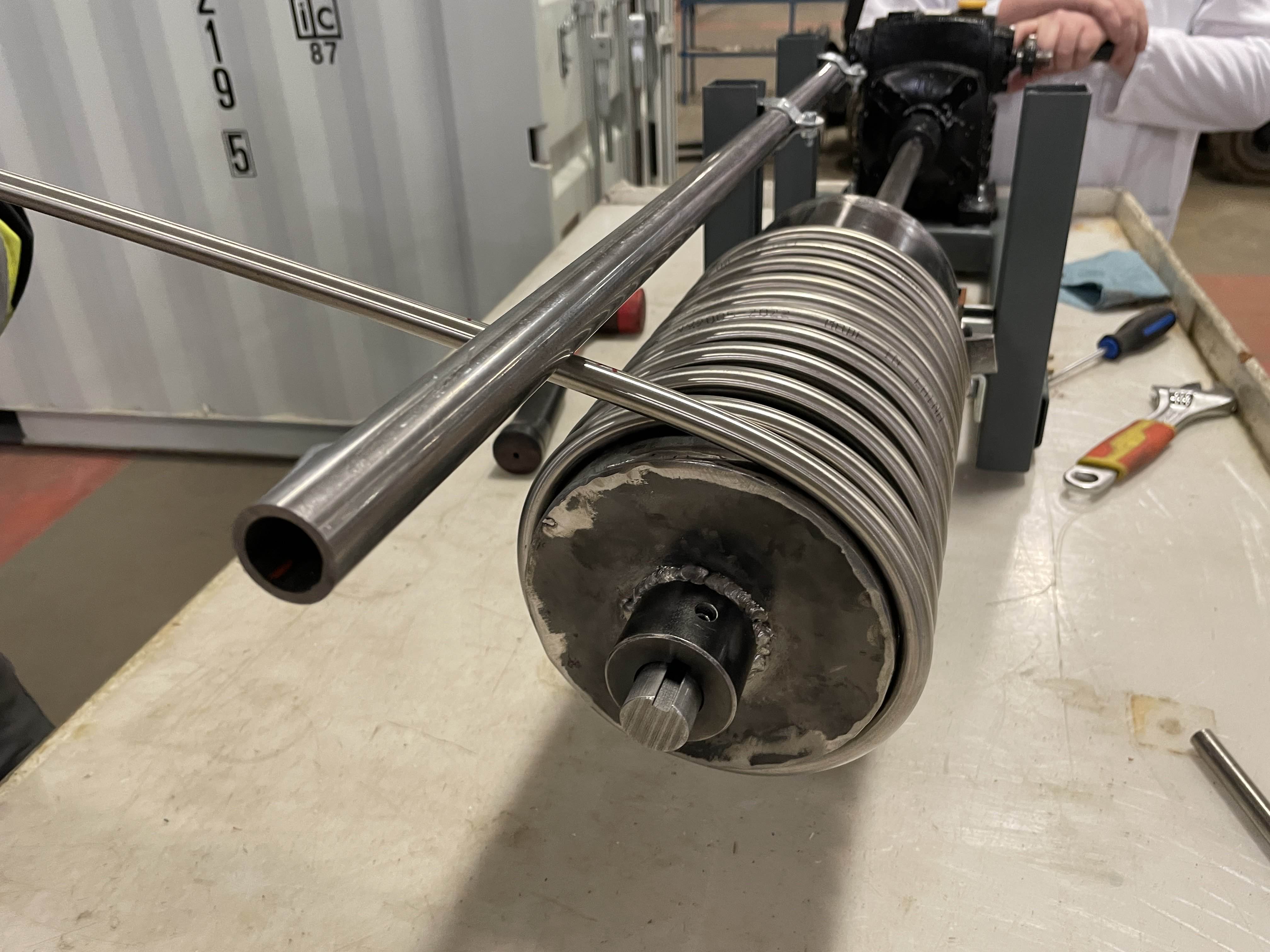
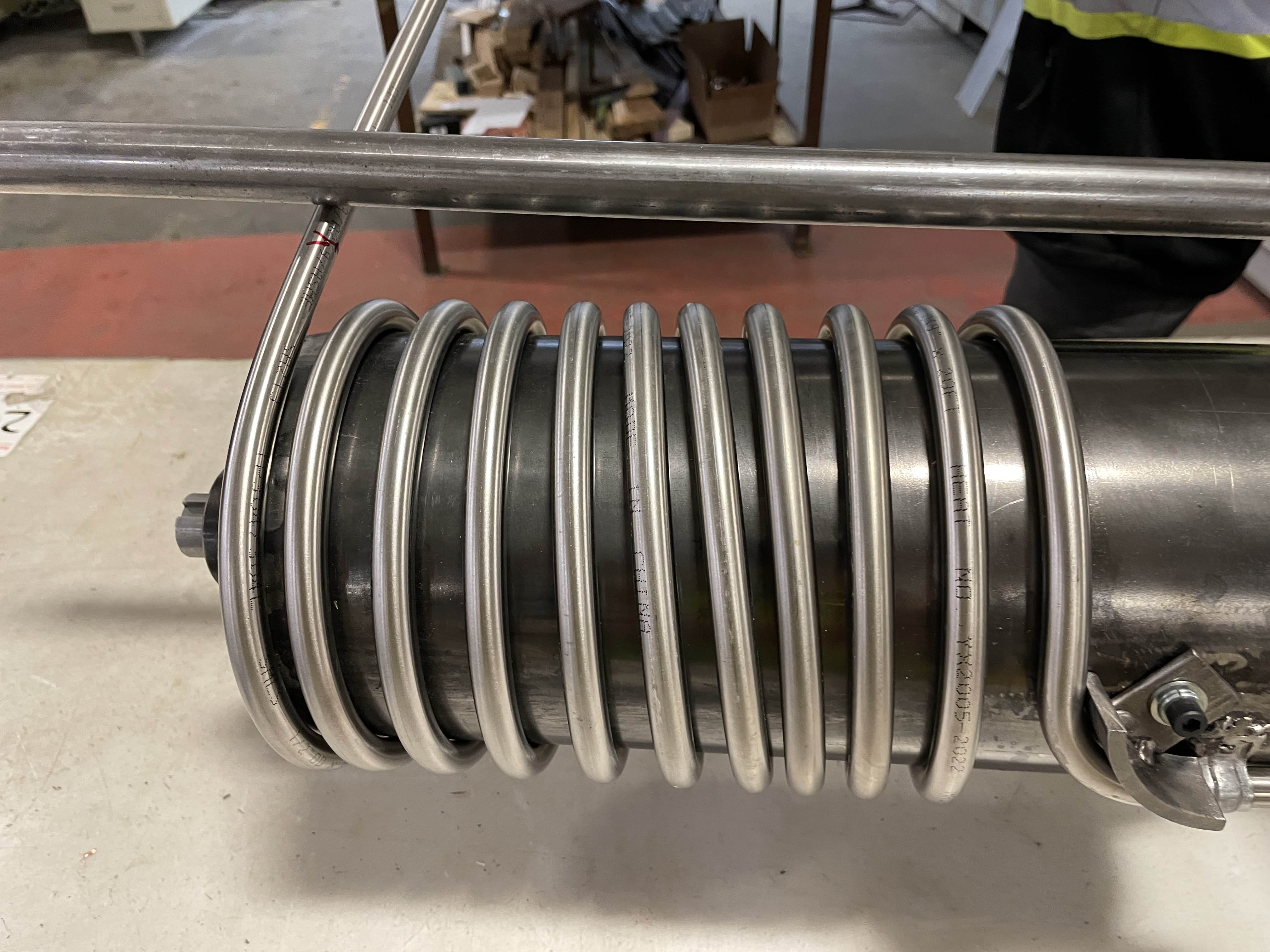
Left: Front View. / Right: Side View.
Outcomes
The final machine successfully produced gas cooling coils to specification at half the cost compared to outsourcing them.
Design changes were made to hydrogen cooling process however, and a new cooling coil design was needed. I added a steel drum extension to the machine to bend the new coil designs and increase its cooling capabilities. The coils from the new machine worked seamlessly with the updated hydrogen cooling processes, saving significant manufacturing costs.
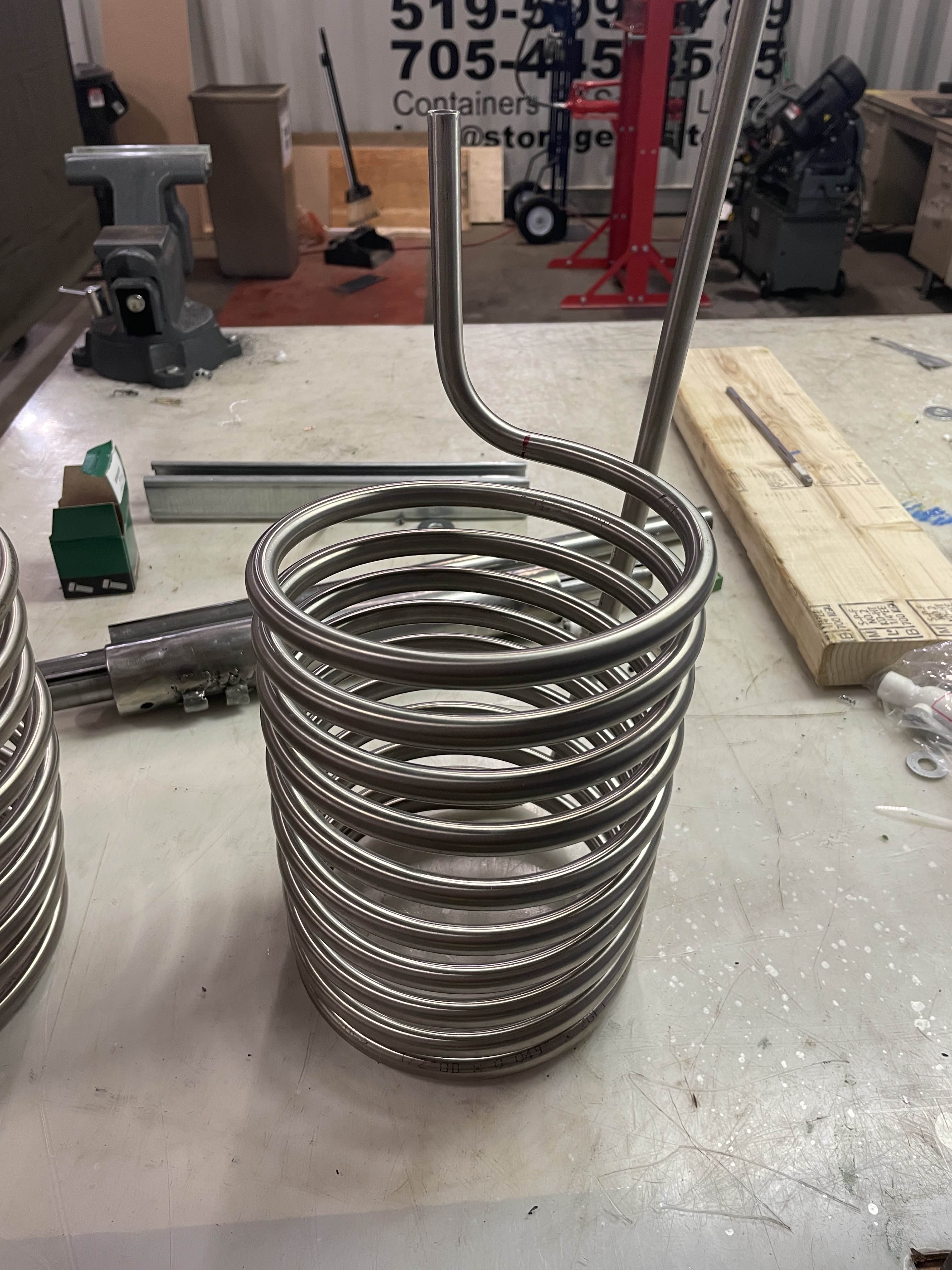
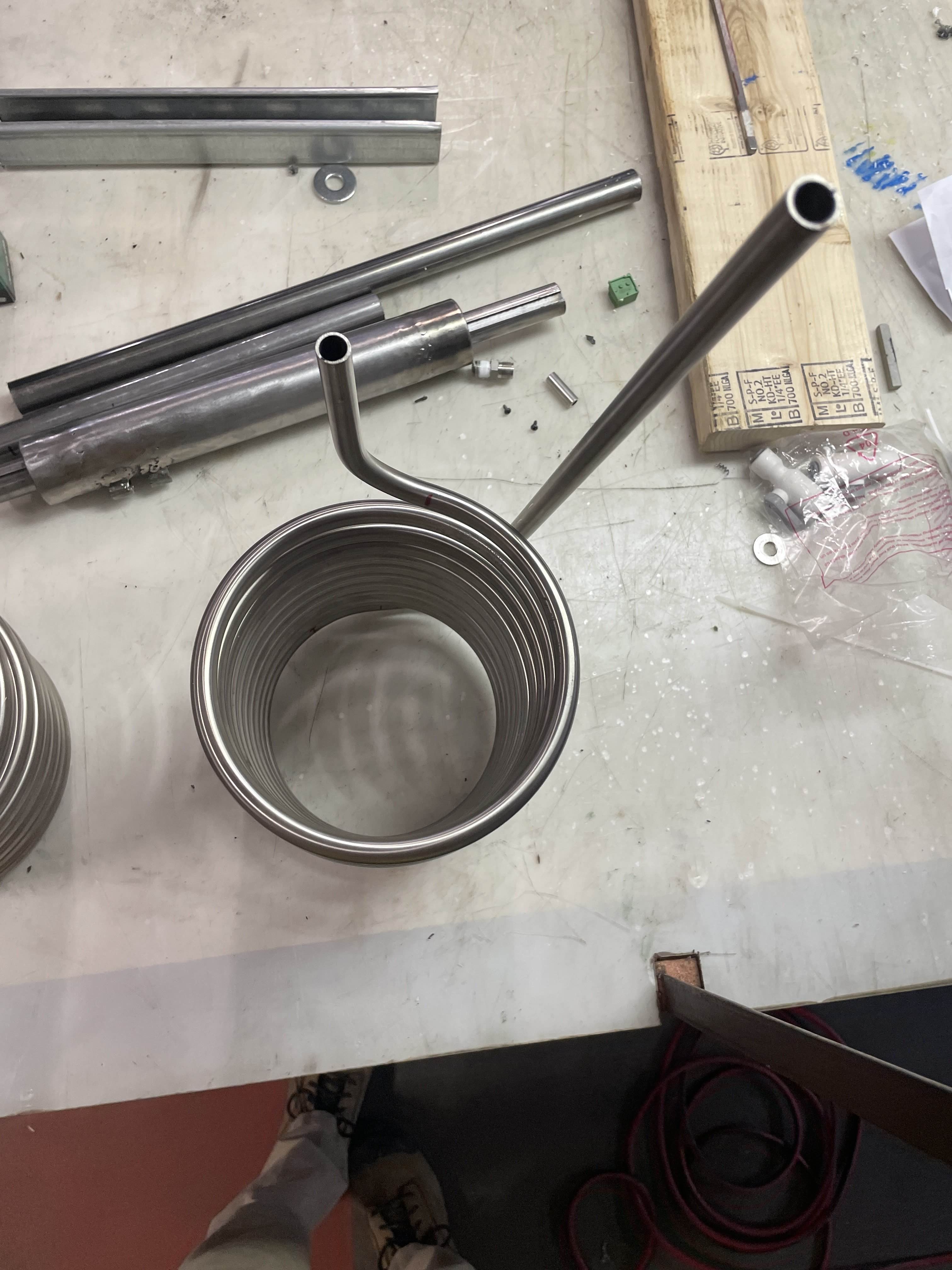
Sample coils from the machine.